THE LABEL
Where it was harvested
Honey must be labelled with the country or countries where it was harvested. A mix can say 'blend of honeys from more than one country'. 'Sussex Honey' must come wholly from Sussex.
Read a label honeyandtreats.
WHAT THE RULES SAY
In England, honey is a protected word.
A product can only be called honey if it is made by bees and meets legal standards for sugar and water content, with nothing added. The label must also say where it was harvested. Here is what the words mean, and what the NHS says about eating it.
Read a label Read the short answer
THE SHORT ANSWER
Honey has its own rules in England.
Health advice treats it like other sugars.
THE LABEL
Honey must be labelled with the country or countries where it was harvested. A mix can say 'blend of honeys from more than one country'. 'Sussex Honey' must come wholly from Sussex.
Read a labelTHE RULES
The Honey (England) Regulations 2015 reserve the word honey. If any additive or ingredient is added, the product must not be called honey.
See the standardsTHE SUGAR
The NHS counts honey as a free sugar, like table sugar. Do not give honey to babies until they are over 1, because it can occasionally cause infant botulism.
Use it wellA QUICK LABEL CHECK
Pick a phrase from a honey label to see what it means under England's honey rules. The bar shows how much the label tells you about where the honey came from.
Based on Trading Standards guidance on the Honey (England) Regulations 2015. Wales has equivalent rules.
TWO NUMBERS WORTH KNOWING
One figure from the legal standard for honey,
one from NHS advice on how much sugar to eat.
THE LEGAL STANDARD · HONEY REGULATIONS 2015
Fructose and glucose in blossom honey
≥ 60<small> g per 100 g</small>
Blossom honey must contain at least 60 g of fructose and glucose per 100 g, with no more than 5 g of sucrose for most honeys and no more than 20% moisture.
FREE SUGARS · NHS
Adult daily maximum, honey included
30<small> g a day</small>
Adults should have no more than 30 g of free sugars a day, roughly 7 sugar cubes. The sugars in honey count towards this, even though they occur naturally.
Heather (Calluna) honey may contain up to 23% moisture. Pressed honey may be extracted with heat of up to 45°C, and honey must not be heated so much that its natural enzymes are destroyed.
FOUR THINGS TO KNOW
Honey is a natural food, but NHS advice treats its sugars like any other free sugar.
WHY HONEY HAS ITS OWN LAW
Defra explains the rules aim to protect the reserved description 'honey' with a minimum standard, give consumers confidence that honey is what it says it is, and prevent misleading or fraudulent practices.
Honey must not have foreign tastes or odours, must not have begun to ferment and must not have an artificially changed acidity. Nothing may be added except other honey.
QUESTIONS PEOPLE ASK
Not until they are over 1 year old. The NHS says honey occasionally contains bacteria that can produce toxins in a baby's intestines, leading to infant botulism, a very serious illness.
NHS advice counts the sugars in honey as free sugars, the type most people in the UK eat too much of. Adults should have no more than 30 g of free sugars a day.
It means honey harvested in more than one country has been mixed. UK rules allow this wording in place of naming each country.
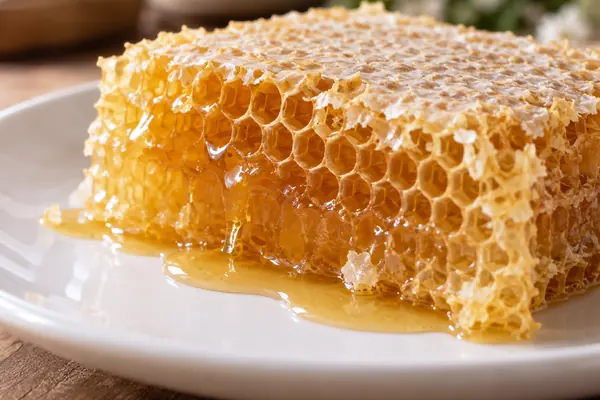
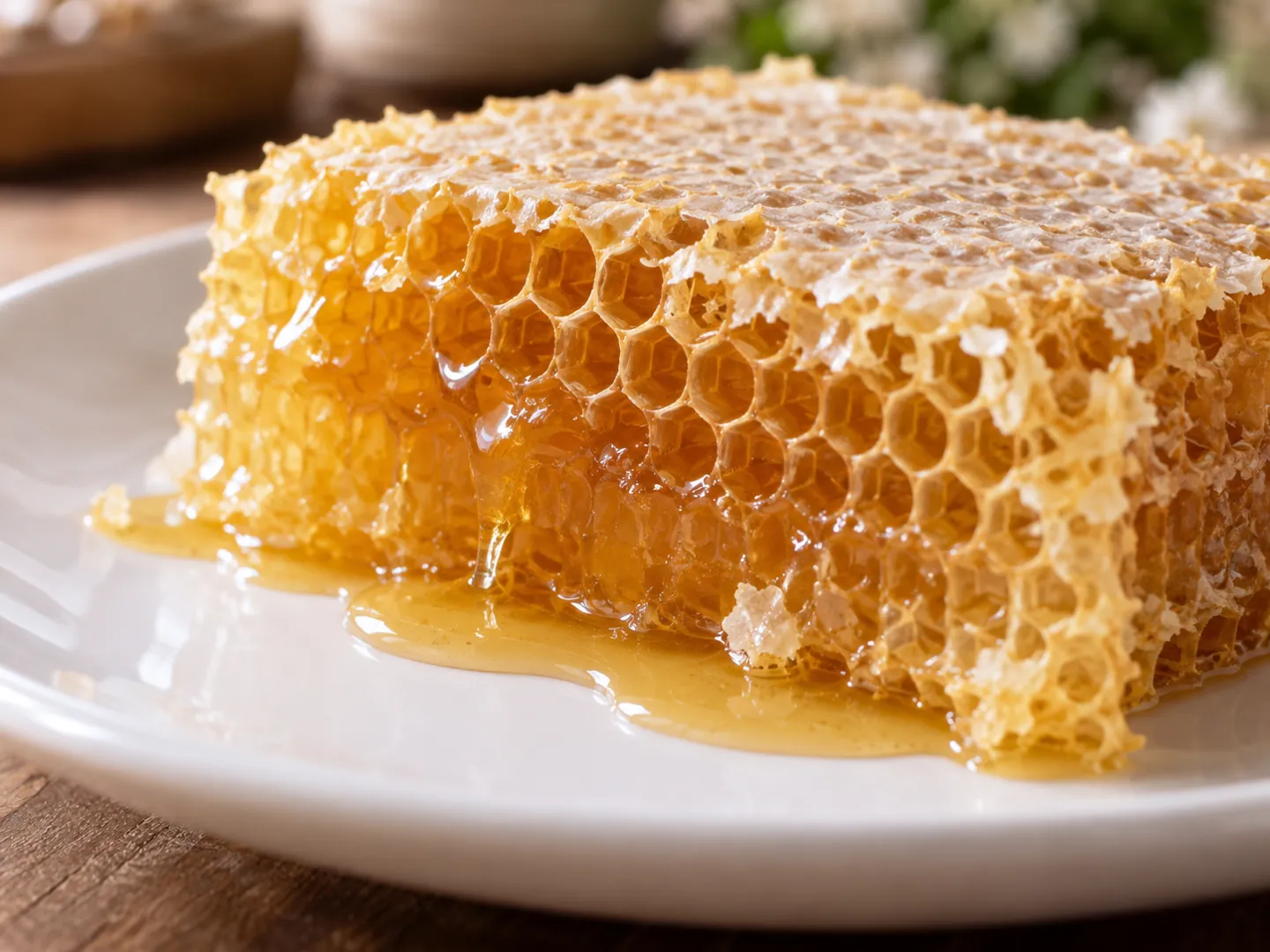
Honey stored by bees in the cells of honeycombs and sold in the whole comb or part of it. Chunk honey, or cut comb in honey, contains one or more pieces of comb honey.
No. If any additive or ingredient is added, the product must not be called honey. Only other honey may be mixed in.
SOURCES
Each figure on this page comes from the sources below. Check them for the full detail and context.